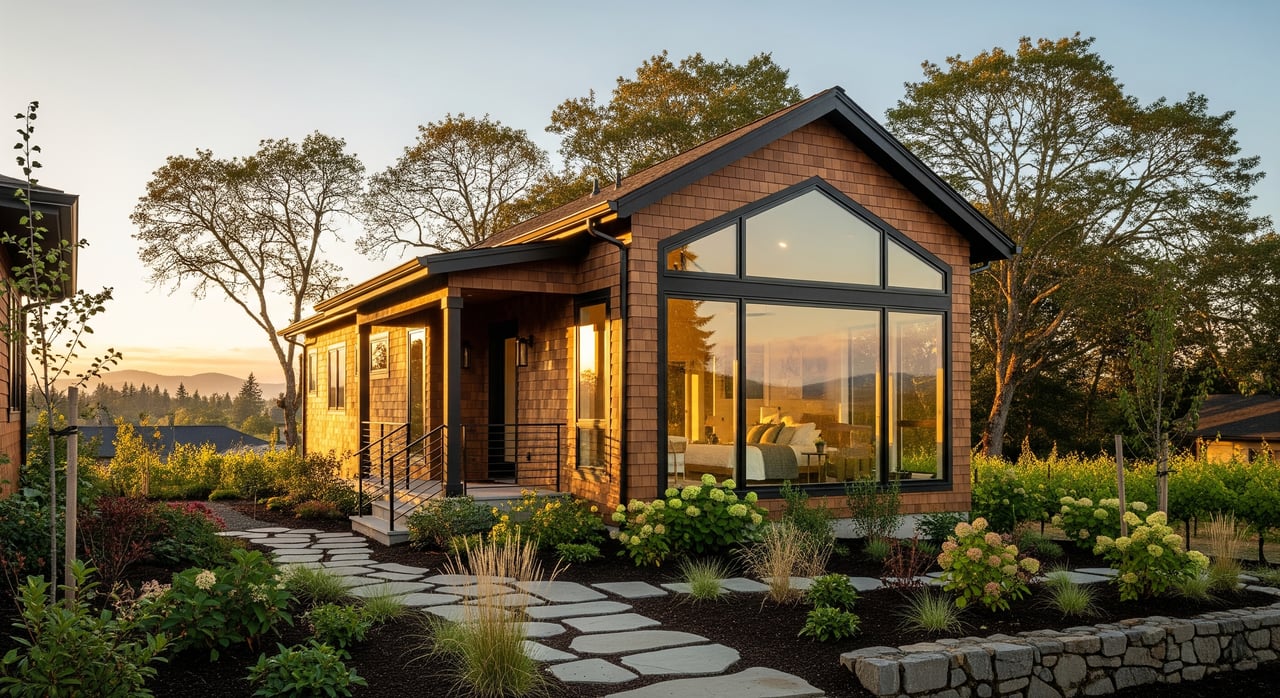
Thinking about adding a backyard cottage or converting a basement in Woodinville? An ADU can unlock flexible living space and steady rental income, but the rules, costs, and timelines vary by location and project type. If you plan well, you can create a space that supports family needs and strengthens your long-term investment. In this guide, you’ll learn the essentials for Woodinville and nearby unincorporated King County so you can move forward with confidence. Let’s dive in.
What an ADU is and why it matters
An accessory dwelling unit is a smaller, independent home on the same lot as a primary residence. You’ll hear terms like granny flat, in-law unit, backyard cottage, or carriage house. The draw is simple: more flexibility for multigenerational living or rental income without buying a second property.
Common ADU types include attached, detached, and interior conversions. Some areas also allow junior ADUs with limited kitchen facilities. Your goals, lot, utilities, and budget will point you toward the right type.
ADU types you can consider
- Attached ADU (AADU): Added to or within the main home, such as a basement conversion or above-garage suite.
- Detached ADU (DADU): A separate cottage on the property. This is typically the most flexible but also the most complex and costly.
- Interior conversion: Finishing existing space, often a basement or upper floor, usually the most cost-effective path.
- Junior ADU (JADU): A smaller unit created within the home, often under 500 square feet, with a private entrance and a compact kitchen setup. Final size and features depend on local code.
Where the rules come from
Three layers shape your ADU path: Washington State policies, City of Woodinville or King County code, and your utilities. State law encourages ADUs and limits some local barriers. Cities and the county set the exact size caps, parking, and permit process.
Inside Woodinville city limits
City code defines what you can build, how big it can be, and where it can go on your lot. Most jurisdictions in the region allow one ADU per single-family lot, and many cap size in the 800 to 1,000 square foot range. Woodinville’s exact size, height, setbacks, and parking rules should be confirmed with the city before you design.
City permits typically flow through planning and building. Expect to provide a site plan, floor plans, and details for structural, electrical, plumbing, and mechanical work. If you connect to city sewer and water, your review will include those utilities.
Unincorporated King County properties
If your address is outside city limits, you’ll work with King County Permitting for zoning and building approvals. County rules also cover size, setbacks, and whether detached ADUs are allowed on your land. If you are on septic, King County Public Health must approve your system’s capacity or upgrades for an added dwelling.
Owner occupancy, parking, and STR rules
Local owner-occupancy rules have evolved in Washington, and some cities have relaxed them. Parking requirements can also be constrained by state policy. Short-term rental rules are local and require careful review. Before you assume anything about on-site parking, owner occupancy, or short-term rentals, verify with the applicable jurisdiction.
Permits and timelines you can expect
Your permit path depends on scope. A straightforward interior conversion usually moves faster than a new detached cottage. Submittal quality matters. Incomplete plans or missing utility information can slow you down.
Typical permit steps
- Confirm jurisdiction and zoning for your lot.
- Schedule a pre-application check-in with city or county staff to validate size limits, setbacks, and parking.
- Finalize design with your architect or designer and assemble the submittal package.
- Apply for building permits and complete any utility or health department reviews.
- Proceed through inspections for foundation (if detached), framing, and systems before final sign-off.
How long it takes
- Interior conversion with minor changes: often reviewed in weeks when the application is complete.
- Detached ADU or complex utility work: plan on several months for review, utilities, and inspections.
- Total timeline from planning to move-in: many projects land in the 4 to 12 month range.
Utility and septic checks
Know your utilities early. Sewer vs. septic is critical. On septic, your design may trigger tank upgrades, drainfield changes, or capacity verification by King County Public Health. Water, power, and stormwater capacity also affect time and cost.
What ADUs cost in greater Seattle–King County
Costs vary with size, design complexity, and site constraints. Labor and materials in our region run higher than national averages, so build a healthy contingency.
Typical cost ranges
- Interior conversion: often about $50,000 to $150,000.
- Attached addition or major remodel: often about $150,000 to $300,000+.
- Detached ADU: commonly about $150,000 to $400,000+ depending on foundation, utilities, and finishes.
These are directional ranges. Your bids will reflect your site, utilities, and finish level.
What drives cost most
- Square footage and layout efficiency.
- Foundation and structure requirements for detached builds.
- Utility connections or septic upgrades.
- Site grading, slope, and drainage solutions.
- Kitchen and bath finishes, cabinetry, and appliances.
- Professional fees, permits, and impact or connection fees.
Budget line items to plan separately
- Architectural, engineering, and potentially a survey or soils report.
- Utility connection fees and any off-site work.
- Tree protection or removal permits.
- Septic evaluations and upgrades if applicable.
- Possible impact fees depending on jurisdiction and ADU size.
A simple timeline framework
- Planning and design: 4 to 12 weeks.
- Permitting: 2 to 12+ weeks based on scope and review cycles.
- Construction: 8 to 24+ weeks, depending on whether it is interior or detached.
Rental demand and how to model ROI
Woodinville draws renters who want proximity to Eastside jobs and local amenities, plus families that value flexible multigenerational options. Long-term rentals typically offer steady demand for studios and one-bedroom units. Short-term rentals may see seasonal lift tied to wine tourism, but they require active management and are governed by local STR rules.
Long-term vs. short-term rentals
- Long-term rentals: simpler operations, lower turnover costs, and predictable occupancy. Budget for vacancy and basic operating costs like utilities you cover, repairs, and insurance.
- Short-term rentals: potentially higher gross income during peak seasons, but with vacancy risk, furnishing costs, cleaning, platform fees, and local lodging taxes. Always verify local registration and licensing rules first.
Property tax and assessment
Adding an ADU typically increases your property’s assessed value. The King County Assessor reviews improvements after permits close and adjusts your assessment, which raises taxes. Interior conversions can add less value than a new detached structure, but you should plan for a tax bump in your ROI.
Financing options to explore
Owners commonly use cash, HELOCs, home equity loans, construction loans, or renovation loans. Lender policies on ADUs vary, and some loan products have specific requirements. Expect lenders to underwrite your loan-to-value and debt-to-income and to vary in whether they consider anticipated rent.
An illustrative ROI example
Consider this simple scenario for a detached ADU:
- Project cost: $250,000
- Market rent: $1,800 per month, or $21,600 per year
- Vacancy at 8 percent: effective rent of $19,872
- Operating expenses at 30 percent: estimated NOI around $13,910
In this illustration, a $13,910 NOI on $250,000 invested is about a 5.6 percent pre-financing return. If you finance, subtract annual debt service to estimate cash flow. Run conservative, likely, and optimistic scenarios and include contingency for cost overruns and vacancy.
Landlord and owner responsibilities
If you rent your ADU, Washington landlord-tenant laws apply. That includes habitability standards, deposits, screening, and lawful lease practices. Insurance is another key step. Many owners shift to a homeowner policy that covers rental use or add landlord coverage for the ADU.
Owner-occupancy rules vary by jurisdiction and may evolve with state policy. Confirm current requirements before you commit to a rental plan.
A practical Woodinville checklist
- Verify jurisdiction. Confirm if your property is inside Woodinville or in unincorporated King County.
- Check zoning early. Confirm allowed ADU type, size, setbacks, height, lot coverage, and parking.
- Book a pre-application conversation. Clarify fees, timelines, and submittal items before final design.
- Review utilities. Determine sewer vs. septic and check water and power capacity. Start septic review if needed.
- Get professional bids. Seek at least two ADU-experienced contractor estimates tied to real plans.
- Model taxes and fees. Ask how your assessment may change after completion and note any impact or connection fees.
- Choose your rental path. Long-term or short-term, and align with local rules and tax registrations.
- Line up financing. Secure a HELOC, construction loan, or other funding before permits.
- Submit permits and build. Follow inspection milestones and close permits to solidify compliance and insurance coverage.
How The Harle Group helps
ADUs sit at the crossroads of lifestyle and investment. You want a plan that respects your property and your time. We bring local, project-minded guidance to help you weigh build vs. buy, estimate rents, and position your property for long-term value. Whether you are adding space for family, planning a future sale with an ADU as a feature, or seeking income today, we will help you map the steps and avoid common surprises.
Ready to explore your options with a local expert who knows Woodinville and the Eastside? Connect with Taeya Harle for a straightforward conversation about your goals and next steps.
FAQs
What size ADU is allowed in Woodinville?
- Most local caps in the region run about 800 to 1,000 square feet, but you should confirm Woodinville’s current size, height, and setback limits directly with city staff before you design.
Can I build a detached ADU on my Woodinville lot?
- Many single-family lots allow detached ADUs, but eligibility depends on zoning, setbacks, lot coverage, and utilities, so verify your specific parcel with the city or county.
How much does a detached ADU cost in our area?
- Detached cottages commonly range from about $150,000 to $400,000+ in greater King County, driven by site work, utilities, foundation, and finish level.
Can I rent my Woodinville ADU as an Airbnb?
- Short-term rental rules are local and may require licensing, taxes, or limits, so confirm current requirements with the city or county before committing to this strategy.
How will an ADU affect my King County property taxes?
- When your project closes permits, the King County Assessor typically reassesses your property, and added value from the ADU increases your property taxes.
How long do ADU permits take in Woodinville or unincorporated King County?
- Interior conversions can be reviewed in weeks when complete; detached or complex projects with utility or septic work often take several months from submittal to final inspection.


